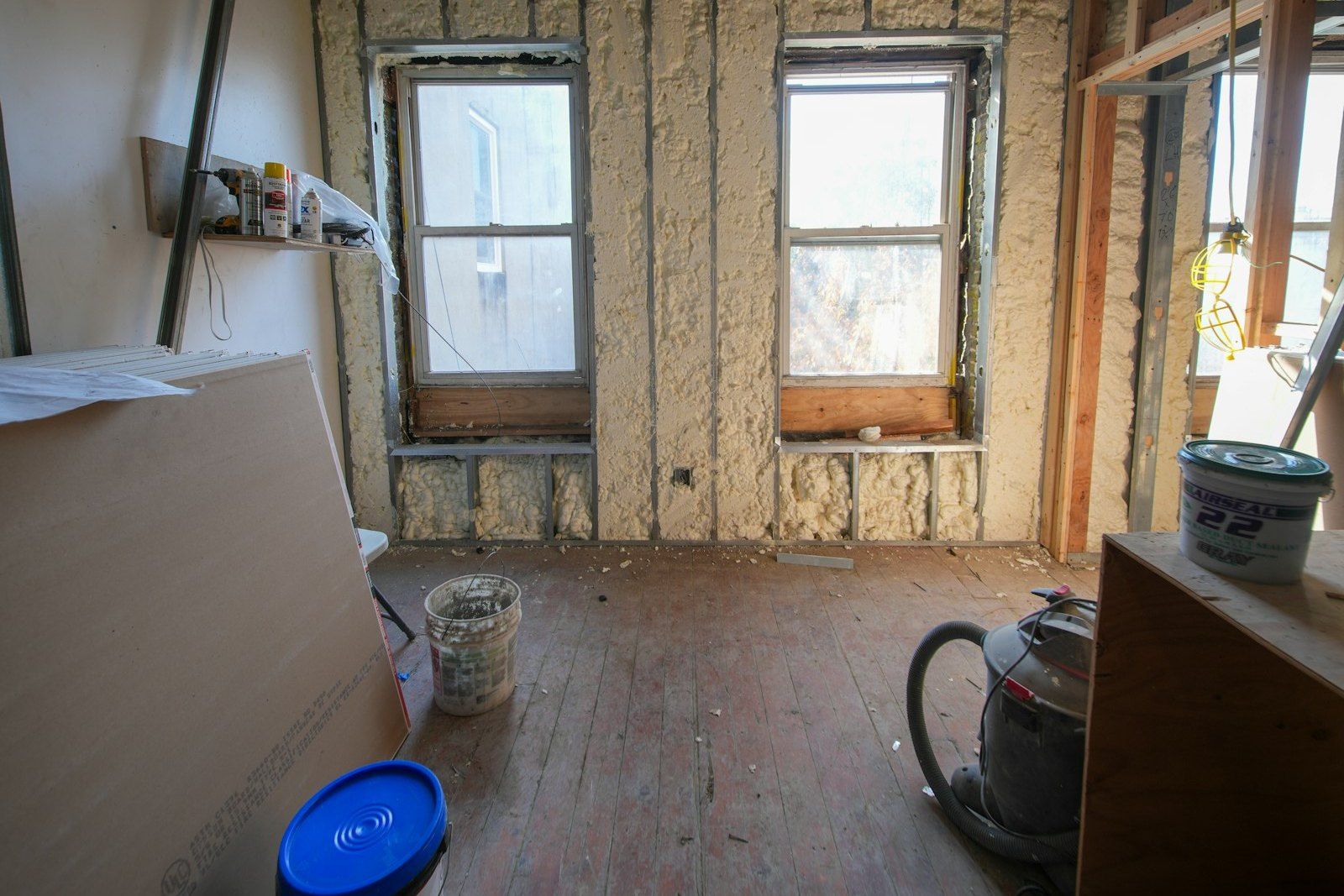
Why it matters to dry things all the way
Water that soaks into drywall, wood framing and subfloor can stay there long after surfaces feel dry. Paint and baseboards cover it up. If that moisture stays, you get swelling, cupped floors, peeling paint, odor and, within a couple of weeks, mold.
Professional drying fixes this by measuring moisture, not guessing:
- The crew takes readings in walls, floors and framing to map how far the water went.
- They open up only what is needed, often pulling baseboards or drilling small holes so air can get into wall cavities.
- Dehumidifiers pull water out of the air and air movers push dry air across wet surfaces.
- They check readings every day or two and adjust equipment until materials reach normal levels.
Mold prevention after water damage
Mold needs moisture, something to eat and time. Drywall paper, wood and carpet backing all count as food, so the only part you can control is the moisture. A crew will:
- Remove wet materials that cannot be dried, like soaked pad and insulation.
- Clean and treat surfaces where water sat.
- Dry the structure fully before anything is closed up or replaced.
If mold is already growing, mention it on the call. Larger areas of mold are usually contained and removed before drying is finished.
Drying a house in Puyallup weather
Damp weather makes drying slower. From fall through spring the outdoor air in Puyallup is cool and humid most days, so opening windows does not help much and can make things worse. That is why crews close the house up and run dehumidifiers instead.
Crawl spaces are the hardest part of many local jobs. Wood framing under the floor can stay wet for weeks if nobody dries it, and the vapor barrier and insulation down there often have to be replaced.
Ask the crew for copies of their moisture readings when the job is done. They show your insurer, and any future buyer, that the house was dried properly.